60%
Admin Overhead Reduction
Estimated reduction through automated AI workflows replacing manual Excel updates and multi-system searches. Project managers reclaimed 8+ hours weekly previously spent on risk register updates.
As the Product Designer for AstraZeneca's Commercial IT team, I led the design of a comprehensive generative AI product suite that transformed how the Oncology Business Unit operates. The challenge was significant: field representatives spent up to 40% of their time searching for information across six disconnected knowledge bases, project managers were buried in manual Excel-based risk tracking, and compliance teams faced delays in regulatory validation processes. I designed and prototyped seven interconnected AI-powered solutions using Figma Make, each leveraging Azure OpenAI capabilities: ERS/ERT Chatbot for conversational knowledge retrieval in Microsoft Teams, Risk Register Dashboard with AI-powered insights in Power BI, O2R Compliance Assistant for automated CSV batch validation, iCH Knowledge Base with semantic search across six unified databases, Pink Pulse SharePoint Portal for field representative resources, FMV Lookup Tool with AI-assisted recommendations, and ONX 2025 Conference App for oncology events. The generative AI approach was transformative—rather than simply connecting systems, the AI layer understood context, synthesized information from multiple sources, and provided proactive recommendations. Field representatives could ask natural language questions like "What are the compliance requirements for the new oncology drug launch?" and receive synthesized answers drawing from policies, training materials, and procedural documentation. The result was a unified AI ecosystem that delivered measurable impact: 60% reduction in administrative overhead through automated workflows, 40% faster information retrieval through semantic AI search, real-time risk visibility for C-suite executives replacing manual weekly updates, and a foundation for enterprise-wide AI adoption across AstraZeneca's pharmaceutical operations.
AstraZeneca's Oncology Business Unit faced critical operational inefficiencies that impacted both field representatives and internal teams. Knowledge was scattered across six disconnected internal databases—each with different interfaces, search mechanisms, and information architectures. Finding a single policy document could require checking multiple systems. Project managers spent 8+ hours weekly manually updating Excel-based risk registers, while field representatives struggled to find training materials, compliance policies, and procedural information buried in disparate systems. CSV batch validation for regulatory compliance required tedious manual checking against policies, consuming compliance team bandwidth. There was no centralized platform for the Pink Pulse field team to access critical resources, and executives lacked real-time visibility into project risks.
Field representatives spent up to 40% of their time searching for information across fragmented systems instead of engaging with healthcare providers—their core mission. The cognitive load of remembering which system contained which information created frustration and errors. Project managers were burdened with manual data entry and risk tracking, unable to provide real-time visibility to leadership; weekly status updates were outdated by the time they reached executives. Compliance teams faced delays in CSV validation, risking regulatory issues in a heavily regulated pharmaceutical environment. The lack of unified knowledge management meant inconsistent training and procedural adherence across the organization, with new employees taking months to understand which systems to use for what purposes.
The fragmented systems created significant operational costs estimated at millions annually: duplicated effort across teams as multiple people searched for the same information, delayed decision-making due to lack of real-time data, compliance risks from manual validation processes that could result in regulatory penalties, and reduced field representative productivity directly impacting healthcare provider engagement. Leadership lacked visibility into project risks, discovering issues only in weekly status meetings rather than proactively. The organization struggled to leverage its institutional knowledge effectively—expertise was trapped in individuals' heads or buried in disconnected systems, making onboarding slow and knowledge transfer unreliable.
All solutions needed to integrate seamlessly with AstraZeneca's existing Microsoft ecosystem (Teams, SharePoint, Power BI, Azure) to ensure enterprise adoption and IT approval. Designs had to comply with Microsoft Fluent Design standards for visual consistency with existing tools. Pharmaceutical regulatory requirements for data handling, audit trails, and compliance documentation were paramount—AI responses needed to be traceable and accurate. Solutions needed to work within enterprise security frameworks, data governance policies, and role-based access controls. AI models required careful prompt engineering to prevent hallucination and ensure pharmaceutical accuracy. All prototypes needed to demonstrate clear ROI for executive approval and development prioritization.
I began by immersing myself in the fragmented knowledge landscape through extensive stakeholder research. Through 20+ stakeholder interviews with project managers, field representatives, compliance officers, and C-suite executives, I mapped the current state: six disconnected internal knowledge bases, each with different search mechanisms, authentication, and information architectures. I documented the Excel-based processes consuming hours of manual effort and identified critical pain points across each user group. The discovery phase revealed that the core problem was not just system fragmentation—it was the cognitive overhead of knowing which system contained which information.

Knowledge base ecosystem mapping from discovery phase
I synthesized research findings to develop a comprehensive AI integration strategy. The core insight emerged: users needed unified AI-powered access to information that understood context and could synthesize relevant content from multiple sources—not just search, but intelligent retrieval and recommendation. I worked with the AI engineering team to understand Azure OpenAI capabilities, define prompt engineering requirements, and establish guardrails for pharmaceutical accuracy. This phase defined the AI-first design principles: conversational interfaces that feel natural, proactive intelligence that anticipates needs, seamless Microsoft ecosystem integration, and compliance-aware responses with source attribution.
Using Figma Make, I created high-fidelity interactive prototypes for all seven AI-powered solutions. Each prototype demonstrated the generative AI interactions—from the conversational ERS/ERT Chatbot understanding natural language queries in Microsoft Teams, to the Risk Register Dashboard with AI-powered risk insights and trend analysis. The prototypes enabled stakeholders to experience AI capabilities before development, facilitating rapid iteration based on feedback. I focused on making AI interactions feel natural while maintaining transparency about AI-generated content through clear attribution and confidence indicators.
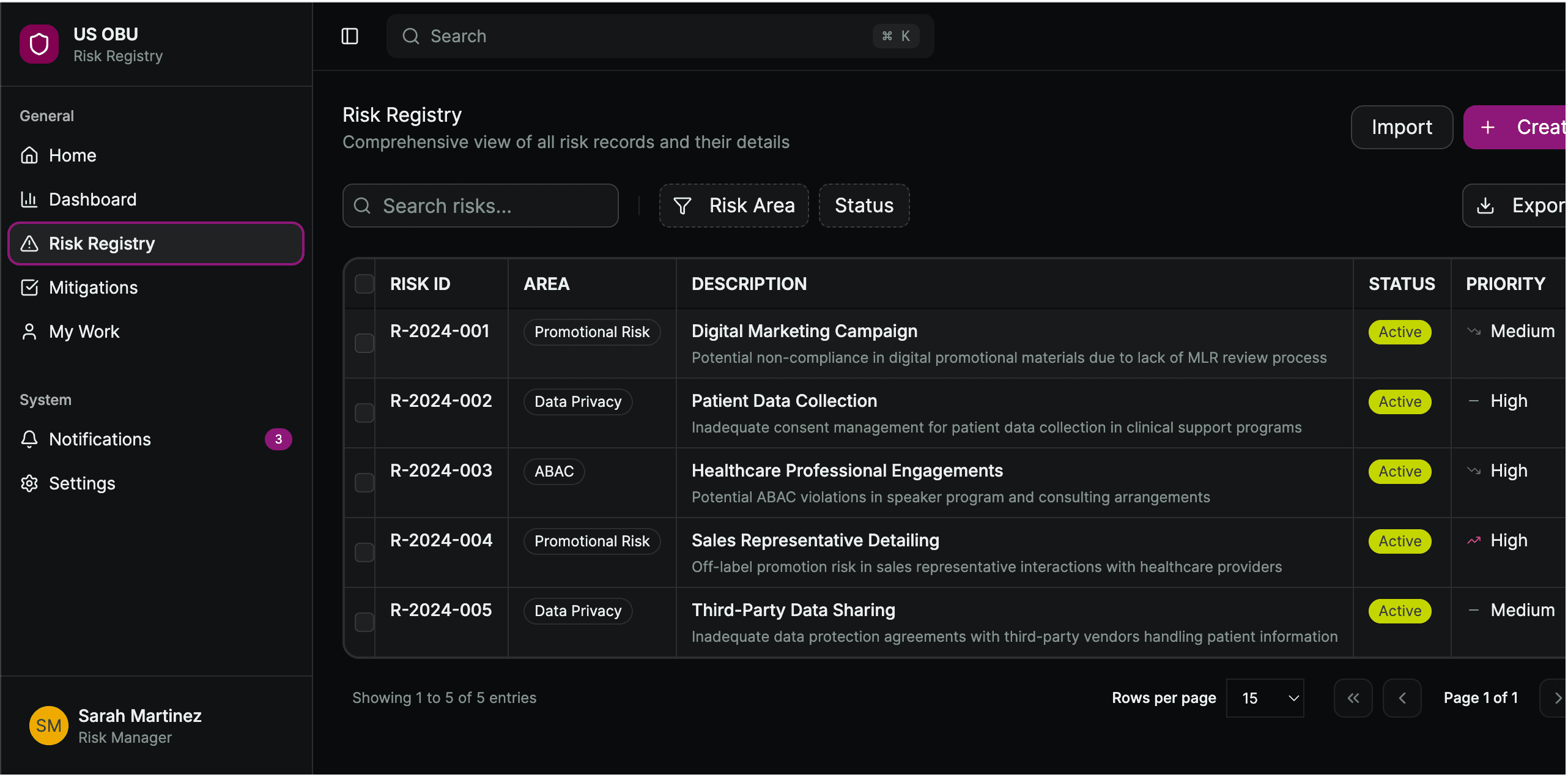
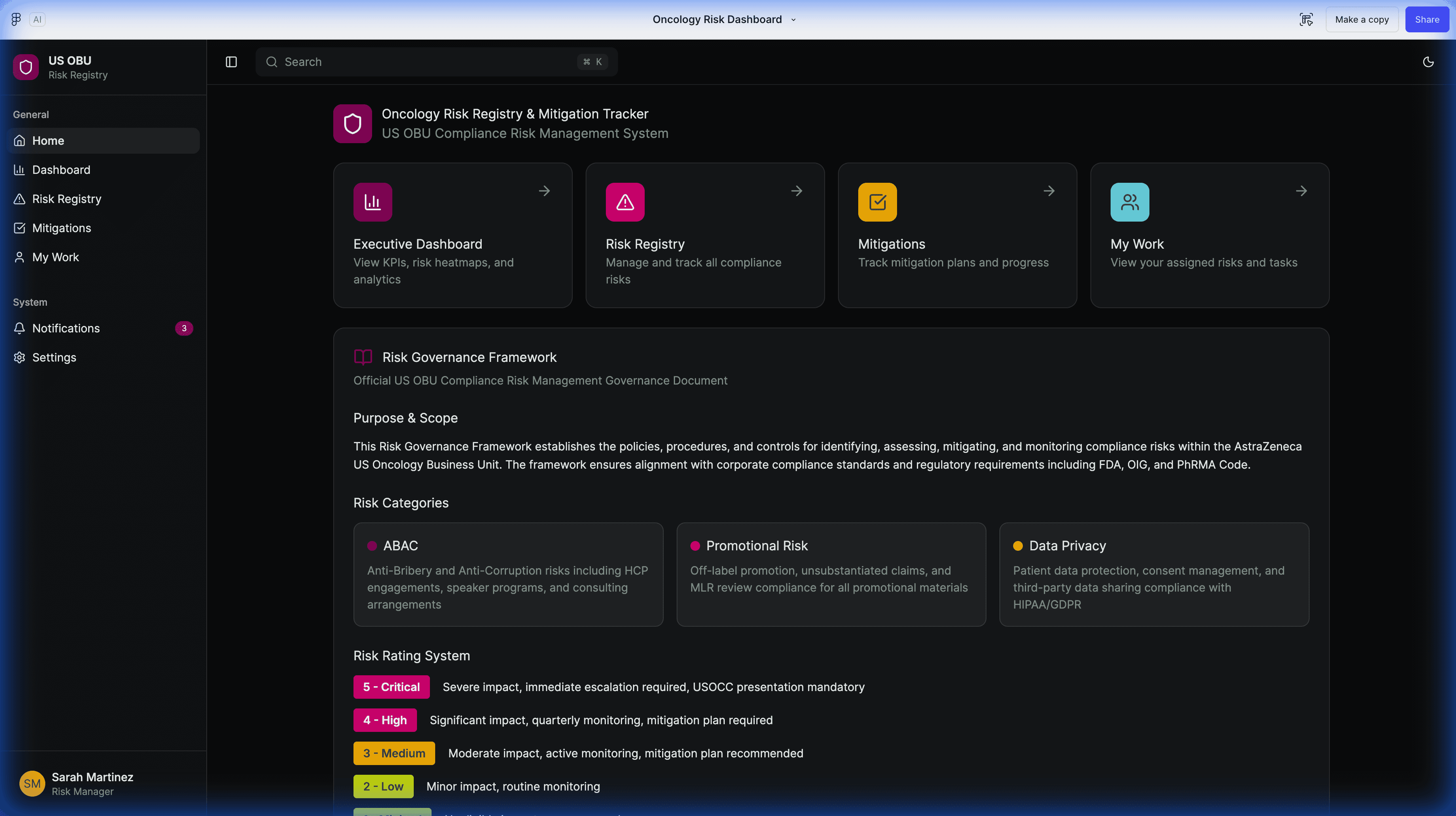
Risk Register Dashboard - AI-powered risk visualization
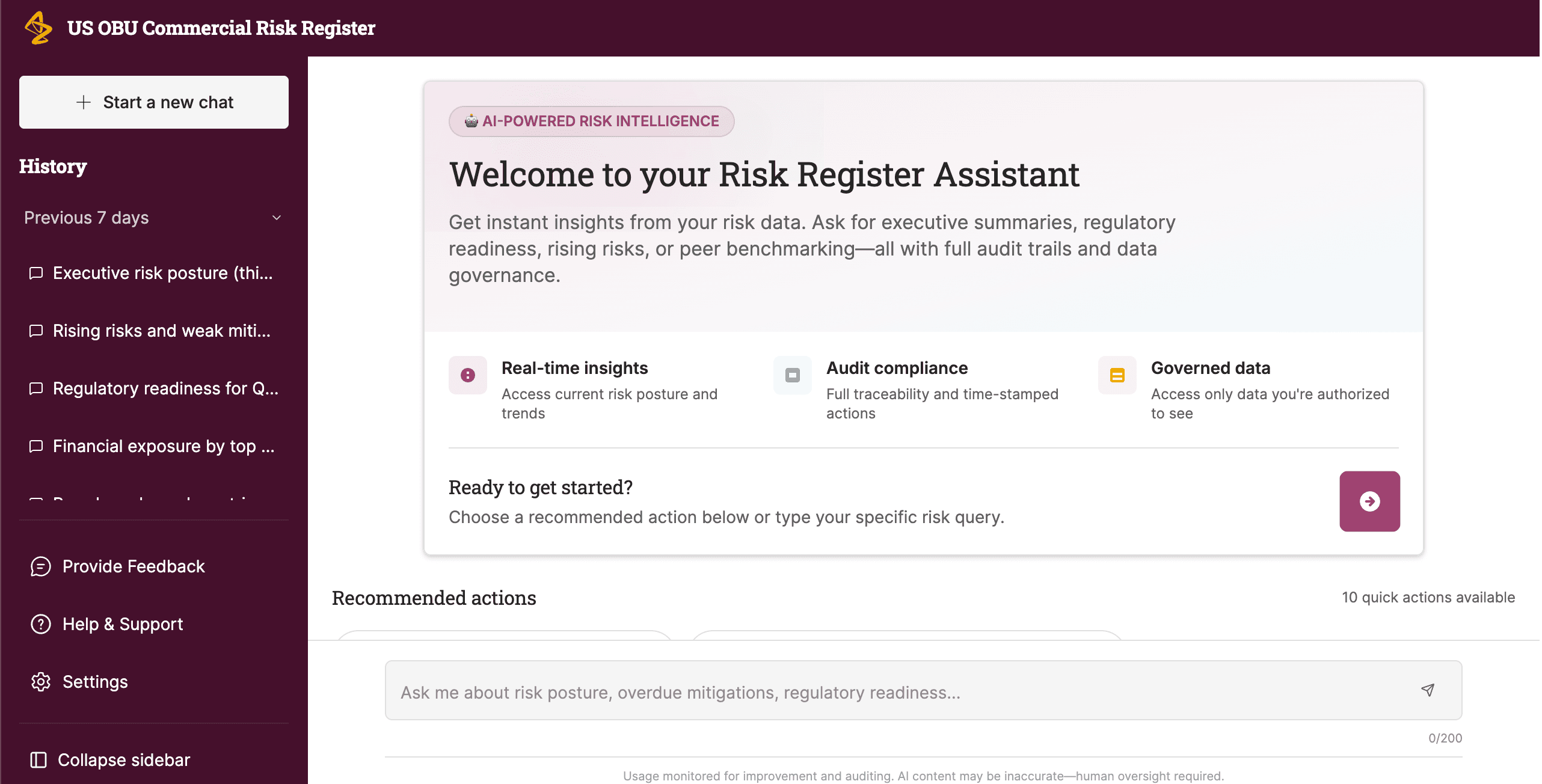
Risk Register AI Assistant - Conversational risk queries
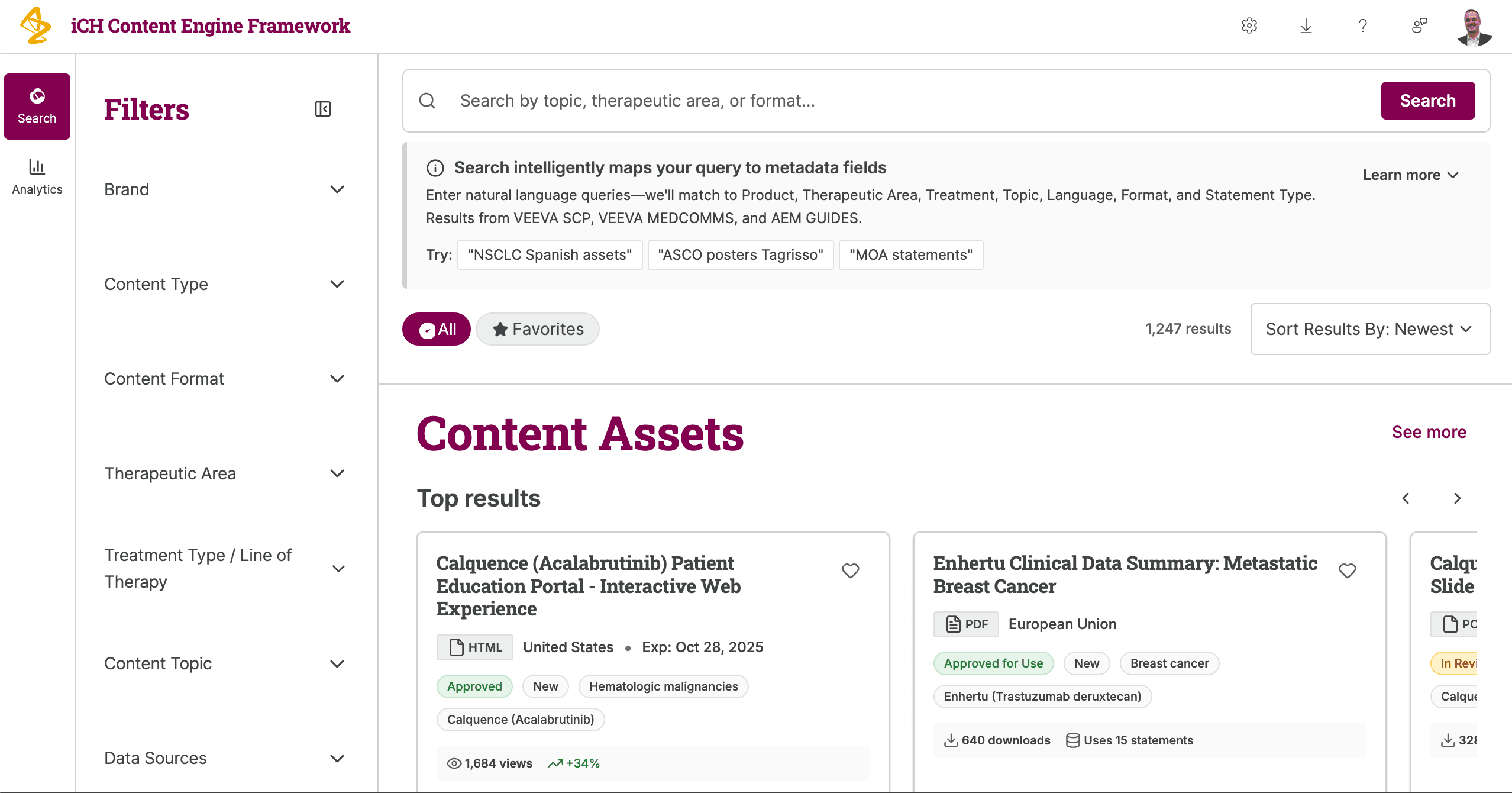
iCH Knowledge Base - AI-powered unified search
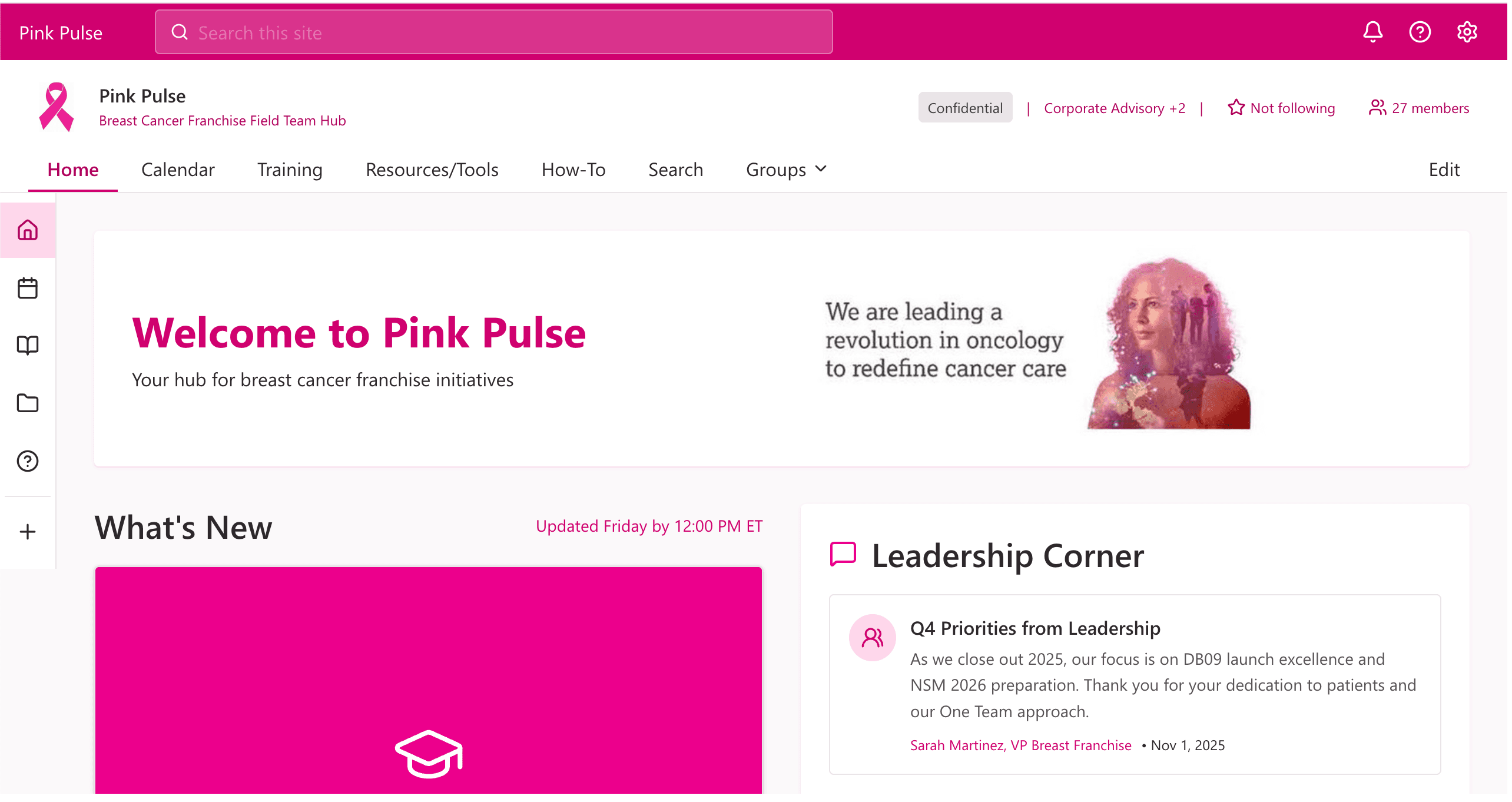
Pink Pulse Portal - Field representative resource hub
I conducted comprehensive validation sessions with key stakeholders across the Oncology Business Unit, focusing on both usability and AI response quality. Project managers tested the Risk Register Dashboard, evaluating whether AI-generated insights matched their expert understanding of project risks. Field representatives explored the ERS/ERT Chatbot, testing natural language queries they would actually use in their work. Compliance teams validated the O2R Assistant workflows for regulatory accuracy. A critical aspect was validating AI response quality—ensuring answers were accurate, properly attributed to sources, and maintained pharmaceutical compliance standards. Feedback was incorporated into refined prototypes, and I documented AI improvement areas for the engineering team.
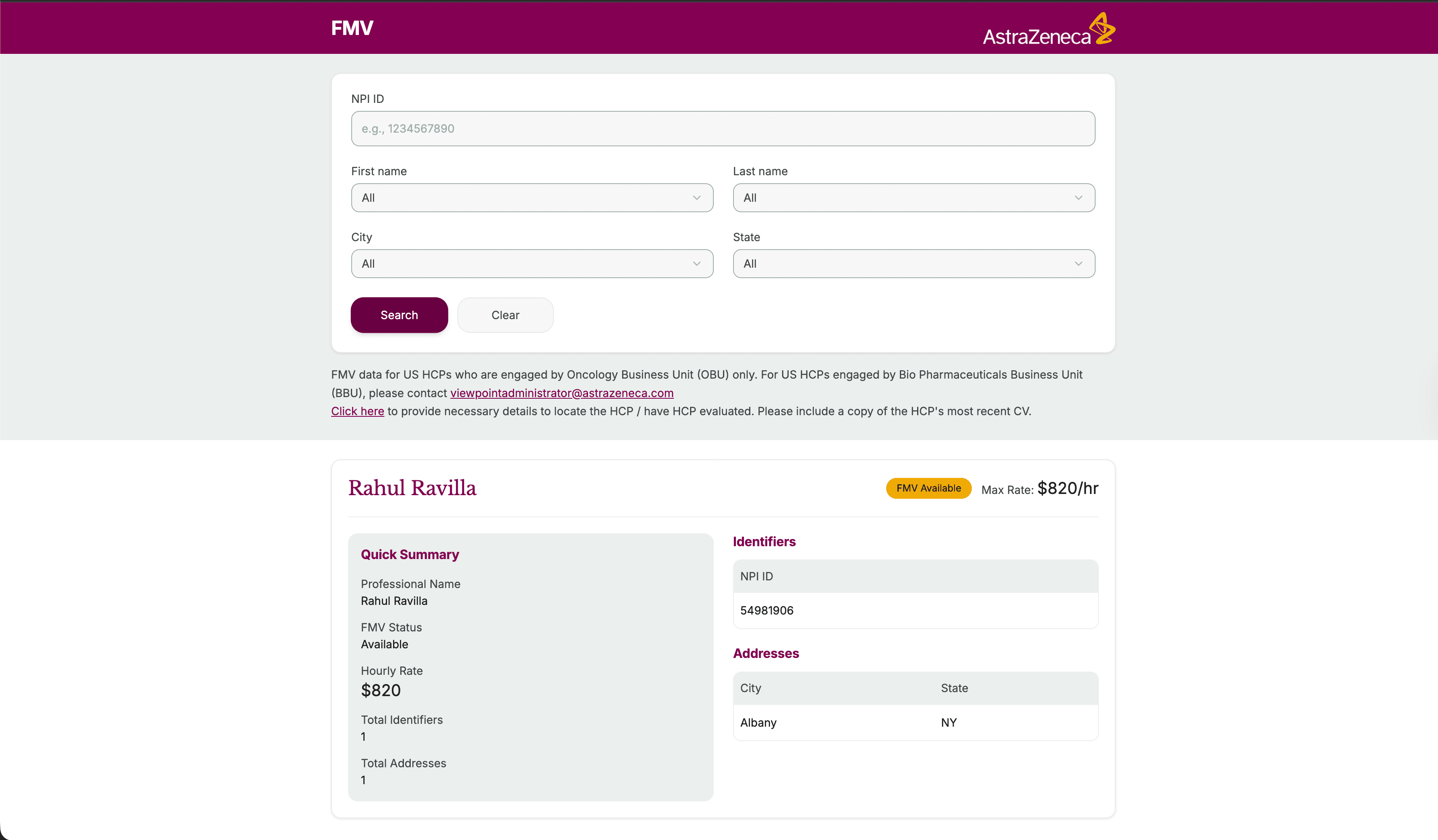
FMV Lookup Tool - Stakeholder validation prototype
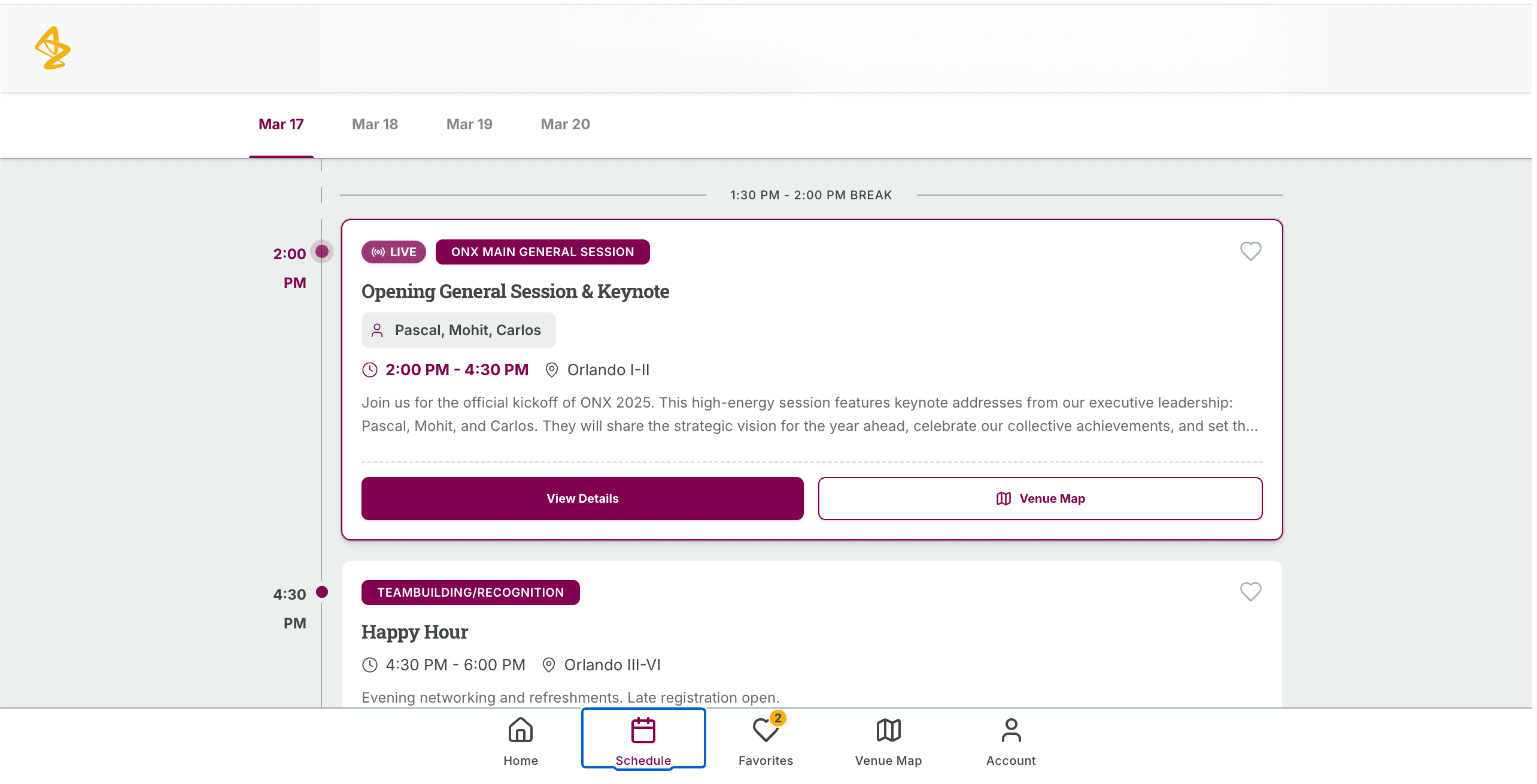
ONX 2025 Conference App - Schedule management

Risk Register Bot - Teams chatbot validation
I designed a comprehensive generative AI product suite consisting of seven interconnected solutions, each leveraging Azure OpenAI for intelligent automation and natural language understanding: **ERS/ERT Chatbot**: A conversational AI assistant integrated with Microsoft Teams, enabling field representatives to query internal knowledge bases using natural language. Rather than searching across six systems, users ask questions like "What are the compliance requirements for drug X?" and receive synthesized answers with source attribution. The chatbot understands context, remembers conversation history, and proactively suggests related information. **Risk Register Dashboard**: Transformed the manual Excel-based risk register into an automated Power BI dashboard with AI-powered insights. The AI layer analyzes risk patterns, identifies emerging concerns, generates executive summaries, and provides personalized insights for C-suite executives—replacing 8+ hours of weekly manual updates with real-time visibility. **O2R Compliance Assistant**: An AI-powered tool for automated CSV batch validation against regulatory policies. The assistant validates data integrity, flags compliance issues with explanations, and maintains audit trails for pharmaceutical regulatory requirements—ensuring continuous compliance rather than periodic manual checks. **iCH Knowledge Base**: A unified search platform consolidating six disparate knowledge bases with semantic AI search. The AI understands query intent, synthesizes information from multiple sources, and provides contextual answers rather than just document links—dramatically reducing information retrieval time from 40+ minutes to under 2 minutes. **Pink Pulse SharePoint Portal**: A centralized hub for field representatives with AI-assisted resource discovery. The portal uses AI to recommend relevant training materials based on user role, recent activity, and upcoming events—proactive knowledge delivery rather than reactive search. **FMV Lookup Tool**: A streamlined interface for Fair Market Value lookups with AI-assisted recommendations. The AI provides comparison data, explains valuation factors, and flags potential compliance concerns. **ONX 2025 Conference App**: A comprehensive conference companion for the 2025 Oncology event with AI-powered networking suggestions based on professional interests and session attendance patterns.
Estimated reduction through automated AI workflows replacing manual Excel updates and multi-system searches. Project managers reclaimed 8+ hours weekly previously spent on risk register updates.
Information retrieval improved from 40+ minutes searching across 6 systems to under 2 minutes with unified AI-powered semantic search. Field representatives can focus on healthcare provider engagement.
Consolidated 6 fragmented databases with different search mechanisms into single iCH Knowledge Base with semantic AI understanding—eliminating the cognitive load of knowing which system contains which information.
Complete interconnected product suite covering chatbots, dashboards, compliance tools, knowledge bases, portals, and conference apps—establishing enterprise AI foundation for future expansion.
C-suite executives gained immediate access to AI-powered risk tracking and insights, replacing weekly manual updates with continuous visibility into project status and emerging concerns.
Comprehensive stakeholder validation across field representatives, project managers, compliance teams, and C-suite executives ensured solutions addressed real user needs before development.
Deep discovery research with diverse user groups from field operations to executive leadership informed AI integration strategy and prioritization decisions.
All 7 solutions designed for seamless integration with Teams, SharePoint, and Power BI—ensuring enterprise adoption without requiring users to learn new platforms.
Risk Register Dashboard - Real-time AI-powered risk tracking for C-suite
Risk Register AI Assistant - Conversational risk analysis
iCH Knowledge Base - AI-powered unified semantic search
iCH Content Engine - Intelligent knowledge management system
Pink Pulse Portal - AI-assisted field representative resource hub

Pink Pulse v4 - SharePoint portal design evolution
FMV Lookup Tool - AI-powered Fair Market Value assistant
ONX 2025 Conference App - AI-enhanced schedule management
Risk Register Bot - Teams chatbot for real-time risk insights